
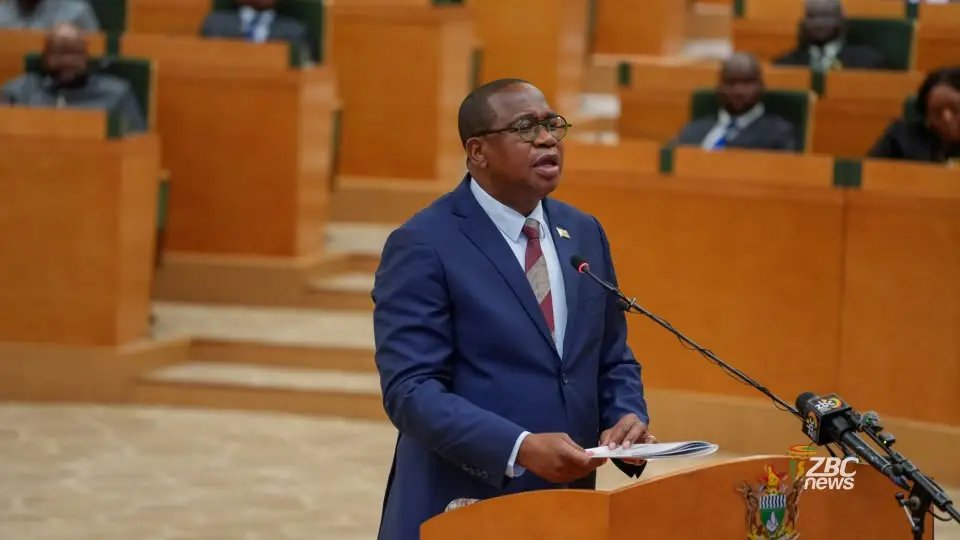
Zimbabwe is targeting March 2027 to clear approximately US$2.97 billion in outstanding arrears owed to three major international financial institutions, in a move that could pave the way for the country to regain access to concessional financing and advance negotiations on its broader external debt.
Finance, Economic Development and Investment Promotion Minister Mthuli Ncube said the government had reaffirmed the March 2027 deadline during the International Monetary Fund (IMF) and World Bank annual meetings held in Bangkok in October.
The Ministry of Finance said the outstanding obligations are owed to the World Bank Group, the African Development Bank Group (AfDB) and the European Investment Bank (EIB).
Zimbabwe’s arrears comprise US$1.7 billion owed to the World Bank Group, US$835 million to the African Development Bank Group and US$433 million to the European Investment Bank.
The debt clearance initiative is part of broader efforts to normalise relations with international creditors, restore investor confidence and unlock fresh development financing after years of restricted access to international capital.
For more than two decades, Zimbabwe’s outstanding arrears have prevented it from accessing new concessional lending from major multilateral financial institutions, limiting the government’s ability to secure affordable funding for infrastructure, public services and economic development programmes.
Ncube said the government had formally approached the three institutions seeking financial support to settle the outstanding obligations.
He indicated that grants and long-term concessional financing would provide the most sustainable route towards clearing the arrears, noting that the process would also depend on institutional approvals and financing arrangements from the respective lenders.
The debt resolution process has been underway since December 2022 through the Structured Dialogue Platform, which brings together the government, international creditors and development partners to discuss economic reforms, governance issues and land tenure reforms.
Zimbabwe’s progress under its IMF Staff-Monitored Programme (SMP) remains an important component of efforts to rebuild confidence among international financial institutions.
Ncube said the country had met all five quantitative targets and structural benchmarks for the end-March and end-June 2026 assessment periods under its 10-month programme.
An IMF mission is expected to conduct the third and final review of the programme between December 2 and 11, 2026.
However, the government acknowledged that it had missed the programme’s social spending target, attributing the shortfall to delays in disbursements and an ongoing audit process.
The authorities have since introduced programme-based financing, strengthened expenditure monitoring and developed a new social registry manual to improve the management of social spending.
The Staff-Monitored Programme does not provide direct IMF financing but is intended to help Zimbabwe establish a track record of implementing agreed economic reforms.
The government is also pointing to improvements in key macroeconomic indicators as evidence of progress in stabilising the economy.
According to figures presented by the Finance Ministry, Zimbabwe’s economy expanded by 8.3% in 2025, with growth projected at 5% in 2026 before slowing to 3.5% in 2027.
The projected slowdown has been attributed partly to the anticipated effects of El Niño-related weather conditions on economic activity.
The ministry also reported that inflation measured in the Zimbabwe Gold (ZiG) currency declined from 32.7% in October 2025 to 4.3% in October 2026.
The government attributed the moderation in inflation to fiscal discipline, tight monetary policy and relative exchange rate stability.
These figures are government-reported estimates and projections.
Compensation for former farm owners whose properties were acquired during the country’s land reform programme also remains an important component of the broader engagement with international creditors.
Ncube said the government had paid at least 800 former farm owners approximately US$820 million under the Global Compensation Deed.
The payments were made through cash and US dollar-denominated Treasury bonds carrying a 2% coupon, alongside a 12.5% stake in Kuvimba Mining House allocated as part of the compensation package.
For farmers whose properties were protected under bilateral investment agreements, the government has paid US$60 million out of an estimated US$130.5 million obligation since 2024.
The remaining US$70.5 million is expected to be settled through equal payments in 2027 and 2028.
The outstanding claims involve former property owners from Denmark, Germany, the Netherlands, Switzerland and the former Yugoslavia.
The planned clearance of multilateral debt arrears represents a significant milestone in Zimbabwe’s efforts to re-engage with the international financial system.
However, meeting the March 2027 deadline will depend on securing the necessary funding and obtaining approval from the institutions involved.
Successful clearance could create an important opening for broader debt restructuring and improved access to development finance, although it would not automatically resolve all of Zimbabwe’s external debt obligations.