
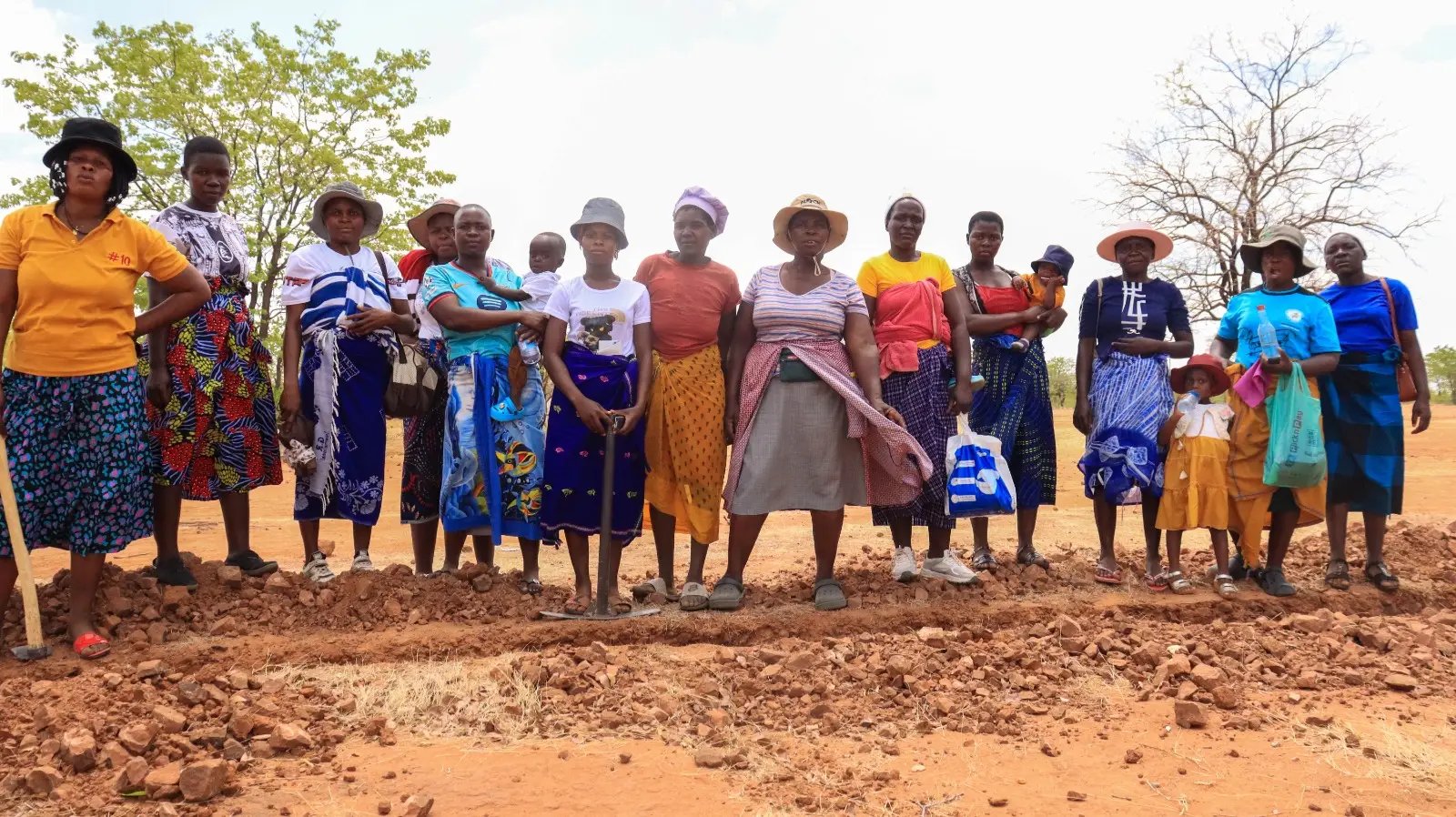
MBIRE, Zimbabwe — As communities in Mbire District prepare for another drought-hit agricultural season, women are stepping into leadership roles traditionally dominated by men, helping shape decisions on water management, livestock protection, and household resilience.
Their growing influence challenges long-held social norms that portray women as unsuitable for leadership or confine their contributions to domestic responsibilities. Through community committees established to deliberate on climate-related challenges, women increasingly help determine how scarce resources are managed and how communities prepare for anticipated El Niño conditions.
For 26-year-old Sharon Chiutsi, being part of these structures is about more than having a seat at the table. It is about having a voice in decisions that directly affect her life and those of other women.
“Being part of these committees allows us to speak for ourselves and participate in decisions affecting our families and communities. As women, we understand the challenges of looking for water, caring for children and keeping households going when resources are scarce. When we are represented in leadership, we can explain these realities and help make decisions that respond to our needs,” she says.
Chiutsi believes women should not be treated as passive recipients of assistance when they possess the knowledge and experience to contribute to community solutions. Their involvement also creates opportunities for younger women to develop confidence and participate in public decision-making.
Her experience reflects a broader shift in Mbire, where women are being encouraged to occupy influential positions in community structures responsible for preparing for climate shocks.
For 35-year-old Mleody Chikwazha, the opportunity to lead is both empowering and a challenge to the belief that men should always have the final say.
“It feels good to be recognised and given a leading position because it empowers us. When women are in leadership, we can stand up for ourselves, participate as equals and make decisions together with men, rather than simply being directed on what to do. We are capable of leading projects and bringing positive changes to our communities,” she says.
Chikwazha is particularly encouraged that her village is embracing women’s leadership, including through a woman village head who supports their participation.
“I am happy that this village is one of the progressive ones. Our village head is also a woman, and she supports the cause of other women. That makes it easier for us to participate and believe that we can take responsibility. We want other women to see that leadership is not reserved for men and that we can contribute meaningfully when given the opportunity,” she says.
Her experience illustrates the importance of supportive traditional leadership in changing attitudes. When women are recognised as legitimate decision-makers, participation can move beyond simply attending meetings to influencing priorities, resources and implementation.
Susan Mashiri, 32, vice-chairperson of a water point committee, believes empowerment must begin by addressing gender inequalities in institutions responsible for governing community resources.
“Women’s empowerment starts with closing the gap between women and men in decision-making. It is not enough to say women are important when they are not given opportunities to lead, speak or influence how resources are used. Water affects everyone, but women often carry a greater responsibility for securing it for their households. We should therefore be involved in deciding where water is provided, how water points are managed and how challenges are addressed,” she says.
Mashiri believes women’s representation makes community structures more responsive because those who experience the daily consequences of water shortages can identify practical solutions. However, she says leadership must also be accompanied by access to information, training and the confidence to challenge decisions that overlook community needs.
The challenges facing women extend beyond representation. In rural communities, restrictive gender expectations, unequal access to land and productive resources, limited control over household income and disproportionate unpaid care responsibilities can undermine women’s ability to participate.
During droughts, these inequalities become more pronounced. As water sources recede, women and girls often spend additional hours searching for water, leaving less time for farming, education, income-generating activities and community meetings. Reduced agricultural production and livestock losses can further increase household pressures, while economic dependence can expose vulnerable women to exploitation and gender-based violence.
For Edith Dutiro, Mbire Agricultural Business Advisory Officer, women’s participation is central to making climate interventions effective. Her own position in a technical agricultural role also challenges the perception that agricultural expertise and leadership belong predominantly to men.
Dutiro says mobilising women was initially difficult because some were hesitant to engage. Building trust and creating an environment where they felt comfortable expressing themselves gradually changed this.
“Initially, it was difficult to mobilise the women because they were not very forthcoming. But because I am also a woman, there was a level of trust and understanding between us. They could relate to me and speak more openly about the challenges they were facing. Gradually, they started coming forward, and together we began developing ways of engaging them and encouraging their participation,” she says.
One approach involved discussions on gender-based violence, sexual and reproductive health and rights, and gender equality, including how climate pressures can worsen existing inequalities within communities.
Dutiro says these conversations helped women understand that climate resilience is not only about agricultural inputs, livestock feed or access to water. It also involves addressing the social conditions determining who controls resources, whose concerns are heard and who benefits from interventions.
“When we started discussing these issues, women began to understand that they also have a role in changing what happens in their communities. They became more confident and started taking up positions in the committees. It has been encouraging to see them move from being hesitant to participating and leading. When women are involved from the beginning, the solutions are more likely to reflect the challenges they actually experience,” she says.
These efforts are taking place under the €500 000 Water and Agriculture Humanitarian Anticipatory Action (WAHAFA) programme, led by Welthungerhilfe (WHH), which targets approximately 15 000 households, representing 70 500 people, across Mbire, Mt Darwin and Rushinga districts.
The programme seeks to strengthen communities before the anticipated effects of El Niño become severe during the 2026/27 agricultural season. Its interventions include improved water provision for people and livestock, supplementary livestock feeding, deworming and dipping, and training and support for community animal health workers.
In Mbire, a major intervention is a sand-abstraction piped water scheme under construction at Musengezi in Ward 5. The approximately 18-kilometre pipeline is expected to supply a primary school, secondary school, clinic, two dip tanks and surrounding communities.
The scheme is particularly important in an area where conventional boreholes can dry up because of limited underground water.
The programme is also targeting the preparation of approximately 90 tonnes of urea-treated stover, using crop residues to produce supplementary feed that can help farmers protect livestock when grazing and natural fodder become scarce.
WHH anticipatory action project field officer John Tapedza says women’s participation in water governance is a deliberate component of the programme.
“We want at least four women represented on every seven-member water point committee, and we are encouraging women to take up chairperson positions. It is encouraging to see women participating in these structures. Many of the people trained in managing piped water schemes are women, and we have made it a practice to encourage women to chair these committees,” he says.
Tapedza says women are among those who interact most frequently with household water resources, making their involvement in decisions about access, maintenance and management particularly important. Women are also participating in livestock feed preparation, including in female-headed households.
Their contribution is critical because drought is not simply a weather event; it threatens livelihoods, nutrition, health and household security.
When water becomes scarce, women often absorb the additional responsibility of finding it. Reduced harvests and livestock losses also place pressure on food supplies and household incomes. Their knowledge of household needs, water use, food preparation and care can help communities identify risks early and ensure that interventions address the needs of vulnerable households.
Across Zimbabwe, the stakes are significant. FEWS NET’s September 2026 outlook warned that the 2026/27 El Niño season could bring an erratic start to the rains, below-average rainfall and above-average temperatures, increasing food insecurity risks as household stocks decline and purchasing power weakens.
Experiences elsewhere in the region demonstrate what women-led climate action can achieve. A recent Nation Online feature documented how 28 women in Manyowe, Malawi, responded to drought by developing a low-cost irrigation system, cultivating three hectares and supplying produce to households and markets. Their initiative demonstrates that women are not merely adapting to climate change; when given opportunities and support, they can develop and lead practical solutions.
In Mbire, the growing leadership of women in water point committees and other community structures offers a similar lesson. Their participation can improve decision-making, strengthen accountability and ensure climate interventions respond to the realities of different community members.
However, representation must translate into genuine influence. Women need access to climate information, leadership training, productive resources and decision-making authority. Addressing unpaid care responsibilities, discriminatory social norms and gender-based violence must also remain part of building resilient communities.
As Mbire prepares for the coming season, the real test will be whether these opportunities endure beyond the project’s implementation.
Women such as Chiutsi, Chikwazha and Mashiri are challenging the assumption that leadership is determined by gender rather than ability, experience and commitment.
Their message is clear: communities cannot build resilience while sidelining half their population. In the fight against drought, climate-induced hunger and livelihood insecurity, women must not simply receive support. They must help decide how it is delivered, how resources are protected and how the future of their communities is shaped.