
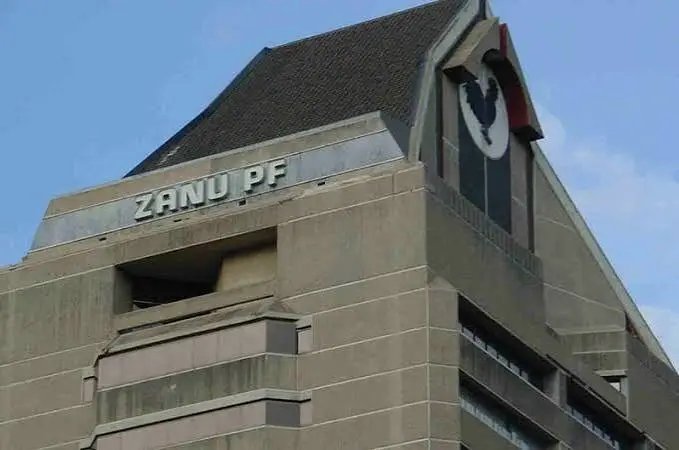
The ruling Zanu PF party is moving to discipline its Members of Parliament who failed to attend crucial parliamentary sittings during the passage of Constitutional Amendment No. 3 Bill (CAA3), escalating its crackdown on members who defied party expectations.
The party’s legal secretary, Ziyambi Ziyambi, announced the planned disciplinary action at Zanu PF’s annual conference in Chinhoyi on Saturday, saying lawmakers who absconded during the Bill’s consideration would face sanctions.
“The party has resolved to invoke disciplinary measures against Zanu PF members of Parliament who absconded from Parliament and failed to vote on the crucial Constitutional Amendment No. 3 Bill,” he said.
Among the prominent lawmakers who did not vote on the Bill, for reasons that remain unclear, were Skills Audit minister Jenfan Muswere, Information Communication Technology minister Tatenda Mavetera, Mashonaland West minister of State for Provincial Affairs and Devolution Marian Chombo, Deputy Primary and Secondary Education minister Angeline Gata, and Deputy Foreign Affairs minister Sheillah Chikomo.
The planned disciplinary action comes as Zanu PF pushes ahead with changes to its internal political arrangements including a resolution to defer its next elective congress from 2027 to 2029 with President Emmerson Mnangagwa expected to remain party leader and first secretary until 2030.
The conference also heard from provincial chairpersons who defended the resolutions submitted by their respective structures, saying the proposals reflected the wishes of grassroots members and reinforced calls for Mnangagwa to remain at the helm.
Harare provincial chairman Goodwills Masimirembwa said the resolutions had emerged from consultations involving district coordinating committees and an inter-district conference.
“We want to assure you that we are guided by the party constitution. We held DCC coordination meetings across Harare Province, where members came up with the resolutions. We also held a provincial inter-district conference, which adopted resolutions,” Masimirembwa said.
He said leadership succession and the alignment of the party constitution with the national Constitution featured prominently in the resolutions.
“These resolutions are here, and the main one concerns leadership. President Mnangagwa must remain strong at the helm of the party. The party constitution must be aligned with the national Constitution, and that is what the people want. President Mnangagwa has removed the country from poverty,” Masimirembwa added.
Mashonaland Central provincial chairman Kazembe Kazembe said his province had conducted consultations to gather members’ views before submitting its resolutions to the conference.
“As Mashonaland Central, we held our conference on August 16 and assigned our DCC chairpersons to go to the ground and ask people what they wanted.
“On September 6, we held an inter-district meeting, which was attended by more than 3 000 people.
“They gave us the resolutions we have brought here. The people said they were happy because the period before 2017 was difficult, with leaders being accused of sabotage. But now there is order in the party, and even this conference can attest to that,” Kazembe said.
Bulawayo provincial chairman Jabulani Sibanda said the party’s current direction was aimed at consolidating Zimbabwe’s independence while reducing reliance on foreign support, technology and industrial inputs.
“President, the party’s journey from where we were to where we are today is giving you the mandate to ensure that until 2030 our independence is safeguarded.
“We must not depend on other nations, machinery, industrialisation or other external factors. You must ensure that our party and country become self-sufficient in medicine, technology and everything else. We thank you for identifying people who can help expand other ministries to accommodate that task,” Sibanda added.