
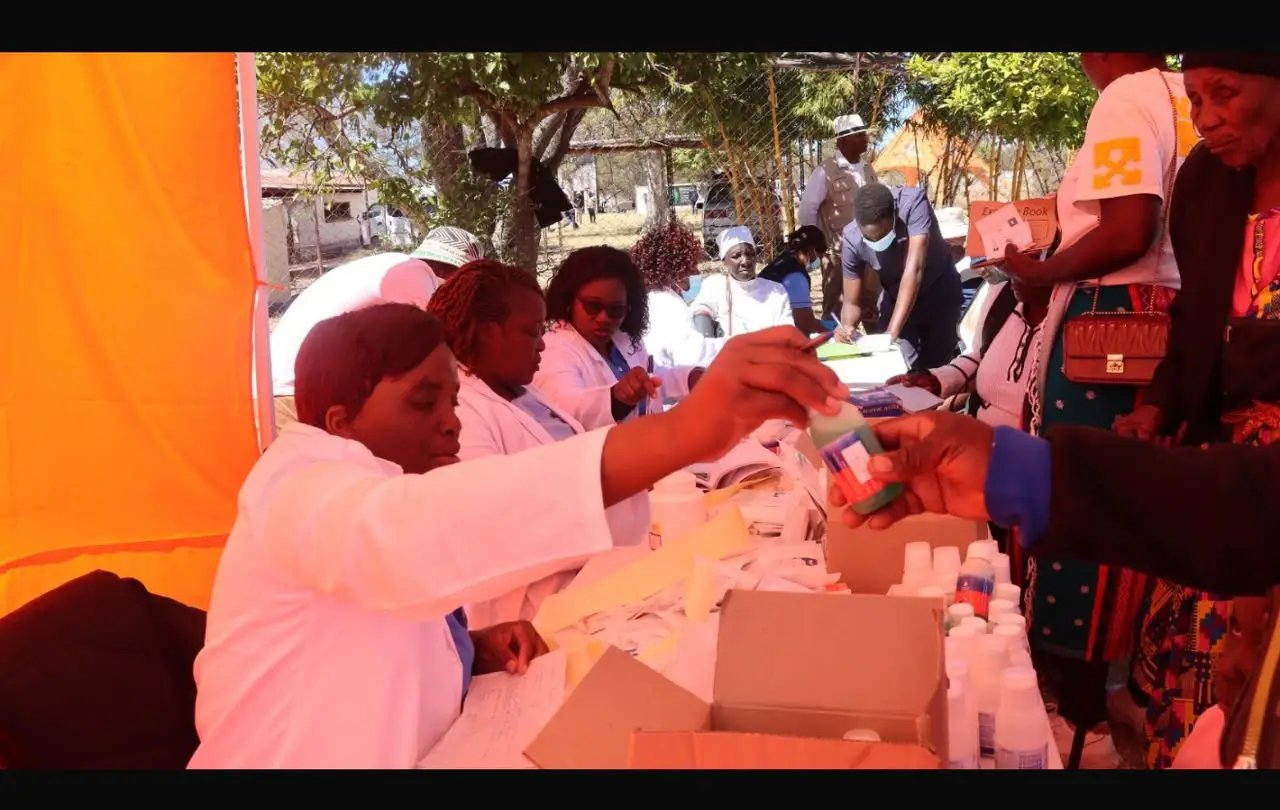
Mutasa, Manicaland — For a mother in a rural community, healthcare is not simply a statistic.
It is the reassurance that a sick child can see a health professional. It is the relief of receiving care without travelling for hours. And, sometimes it is the hope that comes from knowing that someone has brought help closer to home.
That human reality was on display in Mutasa District, Manicaland, where telecommunications company NetOne brought healthcare services closer to rural communities through its NetOne @30 Medical Outreach Initiative.
The programme, implemented in partnership with ZimSmart Villages under NetOne’s Health & Care pillar, is part of a nationwide initiative targeting 30 districts and about 90,000 households with an estimated 3,000 households expected to benefit in each district.
The Mutasa outreach was attended by Defence Minister Oppah Muchinguri and Minister of State for Manicaland Provincial Affairs and Devolution, Mugadza, who commended NetOne for placing communities at the centre of its 30th anniversary celebrations.
Healthcare and national development
Speaking at the event, Minister Muchinguri said initiatives that bring essential services closer to rural communities complement Zimbabwe’s broader development objectives.
“As we pursue the aspirations of Vision 2030 and implement the National Development Strategy 2, we must continue to harness innovation, technology and partnerships to improve the quality of life of our people,” she said.
“Healthcare is fundamental to development because healthy communities are better positioned to participate meaningfully in the social and economic development of our country.”
She also highlighted the importance of partnerships between government, the private sector and development organisations in extending essential services to communities.
For families living far from major health facilities, such interventions can help address one of the most persistent challenges facing rural communities — distance.
Beyond the numbers
For NetOne, the target of 90 000 households represents more than a programme figure.
Behind every household is a family. Behind every family is a story. And behind every story is a community whose future is shaped, in part, by access to essential services.
NetOne public relations manager Ernest Magadzire said the company wanted its 30th anniversary to demonstrate that telecommunications could contribute to communities beyond simply providing communication services.
“For 30 years, NetOne has connected Zimbabweans. As we celebrate this milestone, we want connectivity to mean more than communication. We want it to connect people to healthcare, information, opportunity and essential services, especially in communities that need them most,” he said.
He said the Mutasa outreach reflected the company’s intention to ensure that the benefits of technology and development reached communities across the country.
“When a mother can access healthcare closer to home, when a child receives care, when a family receives information that can protect their health — that is connectivity making a difference. That is what we mean when we say we want to go beyond connectivity,” Magadzire said.
Technology as a bridge
For Tawanda Njerere, chief operations officer of ZimSmart Villages, the initiative demonstrates how technology can help address geographical barriers that often prevent rural communities from accessing healthcare.
“Technology only becomes meaningful when it solves a real problem for people. Through our collaboration with NetOne, we are using connectivity as a bridge between rural communities and healthcare professionals, helping bring healthcare closer to the people,” he said.
The partnership also supports the wider use of telemedicine and digital health solutions, potentially allowing people in remote areas to access healthcare services without always having to travel long distances.
The approach reflects a growing recognition that digital connectivity can serve purposes beyond communication — including improving access to information and essential services.
When connectivity becomes care
For three decades, NetOne has connected families, businesses, students, farmers and communities across Zimbabwe.
The Mutasa initiative represents another dimension of that connection: linking people not only to each other, but also to services that can affect their daily lives.
A network can connect a mother with her family.
It can connect a farmer with a market.
It can connect a student with knowledge.
And it can connect a patient in a remote community with a healthcare professional.
In that sense, the company’s anniversary theme, “The World In One,” takes on a broader meaning.
The initiative is also aligned with the health and development objectives contained in Vision 2030 and the National Development Strategy 2, while contributing to the United Nations Sustainable Development Goals, including SDG 3 on Good Health and Well-being, SDG 10 on Reduced Inequalities and SDG 17 on Partnerships.
But perhaps the most meaningful measure of the Mutasa outreach cannot be found in a programme document or a statistic.
It can be seen in the people who arrived seeking assistance and left with access to services closer to home.
For them, connectivity was no longer simply about making a call or accessing the internet.
It had become a pathway to care.
As NetOne marks 30 years of connecting Zimbabwe, the message from Mutasa is clear: connectivity matters most when it helps improve people’s lives.
30 years of connecting.
30 years of caring.
30 years of transforming lives.
NetOne @30 — The World In One.