
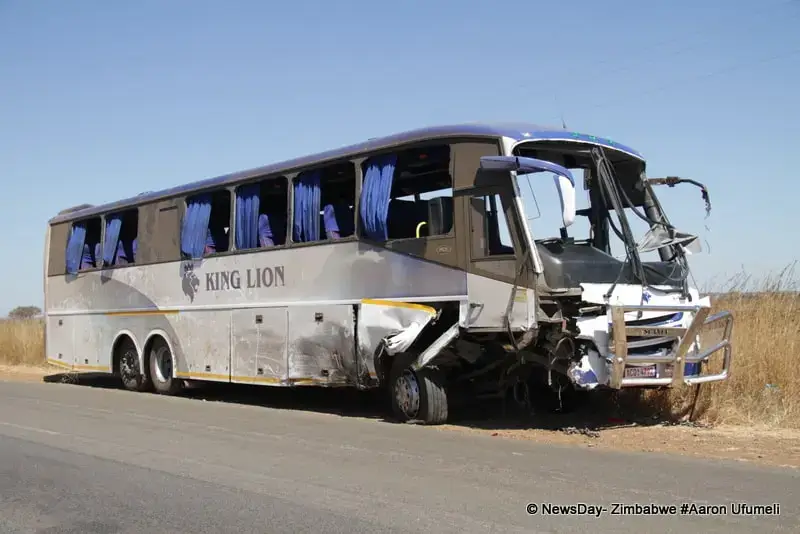
On Zimbabwe’s highways, the difference between arriving home and never making it can sometimes be measured in a few kilometres per hour.
A driver travelling too fast into a bend. A commuter omnibus racing to pick up another passenger. A reckless overtaking manoeuvre on a seemingly clear stretch of highway. A moment of impatience that can leave families planning funerals instead of weekend trips.
For a country where road crashes remain a persistent public safety crisis, Zimbabwe’s decision to launch a National Speed Monitoring System could represent an important shift: from trying to catch dangerous drivers after the fact to using technology to monitor behaviour while vehicles are on the road.
The system, launched in Harare on Wednesday, is designed to monitor public service vehicles in real time and strengthen compliance with speed requirements.
It comes under Statutory Instrument 118 of 2023, which requires public service vehicles to be fitted with speed-limiting and speed-monitoring devices. Government has now given operators a three-month grace period to comply before enforcement measures take effect.
Transport and Infrastructural Development Minister Felix Mhona says the technology is about more than tracking vehicles.
“The initiative is not simply about vehicles. It is about saving lives, improving accountability and strengthening public confidence in our transport system.”
That distinction matters.
Zimbabwe has had road-safety campaigns, police checkpoints, speed traps and repeated appeals for motorists to slow down. Yet the numbers continue to tell a troubling story.
A crisis measured in lives
The latest government road-safety campaign statistics paint a sobering picture.
The Government says a road crash occurs in Zimbabwe approximately every 15 minutes, while an average of five people die and about 38 are injured on the country’s roads every day. Minister Mhona has also said about 94 percent of crashes are linked to inappropriate human decisions.
Those figures should not be mistaken for a confirmed tally of all crashes and deaths from January to September 2026. Rather, they represent the country’s established daily crash and casualty trend used by authorities in road-safety campaigns.
But individual 2026 periods demonstrate how quickly the numbers accumulate.
During the Easter holiday alone, police recorded 337 road traffic accidents, 22 of them fatal. Thirty people were killed and another 104 injured. Police identified speeding as the leading cause, with motorists losing control of their vehicles and overturning, while unsafe overtaking also contributed to head-on collisions.
During the Heroes and Defence Forces holidays in August, 145 road accidents were recorded, including 13 fatal crashes. Eighteen people died, and 51 were injured.
And in Bulawayo alone, police reported 2,596 road traffic accidents between January and June 2026, resulting in 60 deaths and 431 injuries.
There is another statistic that illustrates the wider danger.
Between January and March 2026, 2,081 pedestrians were killed or injured in hit-and-run incidents, according to police figures reported by The Herald, up from 1,905 during the same period in 2025.
The numbers are not merely a road-safety problem. They are a social and economic one.
Government estimates that road crashes cost Zimbabwe around US$400 million annually, through medical expenses, lost productivity, damage to property and disruptions to supply chains. Deputy ICT Minister Dingumuzi Phuti separately said road traffic accidents cost the country approximately 3 percent of GDP annually.
Every crash therefore carries a cost far beyond the scene of the collision.
Why speeding matters
Speed does not necessarily cause every crash. But when a crash occurs, speed can determine how much time a driver has to react, whether a vehicle can remain under control and how severe the consequences are.
That is why the focus on speed monitoring is significant.
Police spokesperson Commissioner Paul Nyathi said speeding by public service vehicles has been a major contributor to fatal crashes.
“It will assist us to effectively enforce traffic laws and curb speeding by public service vehicles which has been a major cause of fatal road accidents,” Nyathi said.
The new system could change the calculation for drivers who have traditionally relied on the uncertainty of manual enforcement.
Instead of asking whether a police officer is around the next corner, drivers will increasingly have to consider whether their speed is being electronically recorded.
That creates the possibility of a different kind of deterrence.
A speed camera or monitoring system does not need to chase a speeding vehicle. It can capture information, create an electronic record and provide authorities with evidence for enforcement.
The National Speed Monitoring System is also expected to give authorities better information about how public service vehicles operate, providing data that can be used for regulation, transport planning and intervention.
In other words, the technology can potentially move enforcement from sporadic observation to continuous oversight.
From roadside policing to digital enforcement
Zimbabwe has already begun experimenting with technology-driven traffic enforcement.
The Electronic Traffic Management System had, by early August, flagged more than 1.1 million traffic violations in Harare since going live. Authorities were validating the violations before penalties were issued, recognising the need to account for circumstances such as police-controlled intersections and unclear road markings.
The National Speed Monitoring System takes that technological approach into the public transport sector.
This is particularly important because buses and commuter omnibuses carry large numbers of people.
A speeding private vehicle puts its occupants and nearby road users at risk. A speeding public service vehicle potentially puts dozens of passengers at risk at the same time.
For Mhona, that responsibility should remain central to the system.
“To our drivers, I urge you to remember that every journey carries human lives,” he said.
That is perhaps the simplest argument for the system.
A commuter getting into a bus is not merely buying transport. They are entrusting their life to the driver, the operator and the regulatory system.
But technology cannot drive the driver
There is a danger in believing that cameras and monitoring devices alone will solve Zimbabwe’s road carnage.
They will not.
Mhona himself acknowledged that technology has limitations.
“Technology gives us an opportunity to improve the way we manage public transport, but technology alone cannot solve every challenge.”
The effectiveness of the system will depend on what happens after an offence is detected.
Will violations be processed quickly?
Will operators who repeatedly breach speed regulations face meaningful consequences?
Will vehicles without compliant monitoring equipment actually be taken off the road?
Will data be accurate and protected from manipulation?
Will enforcement be applied consistently?
And will authorities use the information generated by the system to identify dangerous routes, repeat offenders and patterns of reckless driving?
These questions matter because a monitoring system that records violations without effective enforcement risks becoming another database rather than a road-safety intervention.
Nyathi has already indicated that police intend to take a tougher approach after the grace period, warning that non-compliant vehicles could be arrested and impounded.
The bigger opportunity
Perhaps the most important opportunity created by the system is the data.
Zimbabwe has historically struggled with fragmented road-crash information. A properly functioning digital monitoring network could provide authorities with a clearer picture of when, where and how public service vehicles are being driven.
That could help answer practical questions.
Which routes record the highest levels of speeding?
Which operators repeatedly breach speed limits?
Which vehicles are constantly involved in violations?
At what times are speeding violations most common?
Are particular stretches of road associated with repeated dangerous driving?
And where should police, road engineers and emergency services concentrate their resources?
The answers could make road safety more preventative.
Instead of waiting for a crash to identify a dangerous location, authorities could potentially identify risky behaviour before it becomes a fatal statistic.
That is where the National Speed Monitoring System could become more than a policing tool.
It could become a public safety intelligence system.
The real test begins after the launch
For Zimbabweans, the launch itself will mean little if it does not translate into fewer funerals.
The Government has set a target of reducing road fatalities by 25 percent by 2030.
That target provides a measurable test.
The country will need to track crashes, deaths, injuries, speeding violations, compliance rates and enforcement outcomes over time.
If the system works, the evidence should eventually appear not only on dashboards and government reports but on Zimbabwe’s roads: fewer overturned buses, fewer high-speed collisions, fewer families receiving devastating phone calls.
Nyathi described the system as a potential “game changer”, but even he attached an important condition to that assessment: it must be properly implemented.
“Properly implemented, we will see a reduction in the total road crashes,” he said.
That is ultimately the challenge facing Zimbabwe.
The country does not need another road-safety initiative that looks impressive at launch and fades from public attention afterwards.
It needs a system that works every day, on every journey, long after the cameras are switched on and the launch speeches are over.
Because on Zimbabwe’s roads, every speeding vehicle is not just a traffic violation.
It can be a life-changing decision made in seconds.
And the success of the National Speed Monitoring System will be measured by how many of those seconds end differently.