
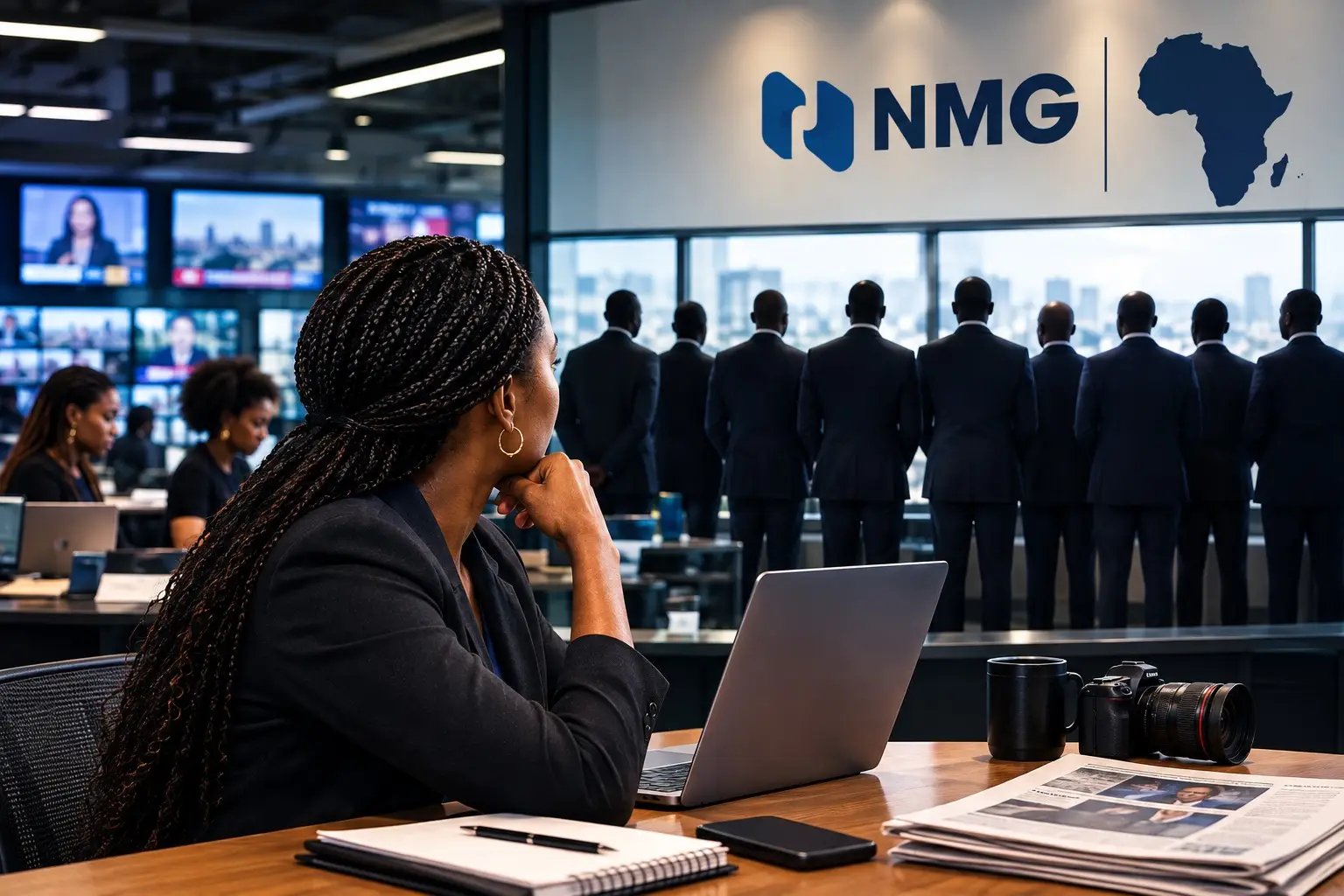
Nation Media Group’s latest regional editorial restructuring has triggered an uncomfortable question about the place of women in African newsrooms: who gets to decide whose voice is heard?
NMG announced 11 senior editorial appointments across Kenya, Uganda and Tanzania on September 16. All 11 positions went to men, including the acting editor-in-chief and senior editorial leadership roles in Kenya.
The announcement has prompted criticism over the absence of women from the new leadership structure.
NMG Group Managing Director and CEO Geoffrey Odundo has acknowledged the concerns, saying the organisation had “taken note of the public conversation” around women’s representation. He pointed to women making up 33% of NMG’s newsroom, 42% of its Executive Committee and 41% of heads of departments, with the company targeting 40% representation.
Those figures are significant. But they also raise a harder question: if women are already present throughout the organisation, why are they missing when some of the most powerful editorial positions become available?
The issue is not that men cannot lead newsrooms. It is that an entirely male senior editorial structure can reinforce a wider pattern in African media where women enter journalism but struggle to reach the rooms where editorial priorities are determined.
Research by Women in News found that women held just 30% of editorial leadership positions in Africa in 2024. Women occupied only 20% of top business leadership positions. Across the organisations studied, 36 of 50 editorial leadership changes involved a man replacing another man.
That makes the NMG appointments part of a much larger African story.
Women are reporting the news. But are they shaping it?
Gender Links’ 2026 Gender and Media Progress Study provides an important warning.
Women now account for 42% of reporters across Southern Africa, but only 29% of news sources. Women are particularly underrepresented as experts and spokespersons and remain least visible in coverage of politics, business and leadership.
That distinction matters.
Having women in newsrooms does not automatically mean women’s voices are represented in the news.
An editor decides which story leads. An editor decides who gets interviewed, which expert is considered authoritative and which issues deserve newsroom resources.
So gender equality in media cannot simply be measured by the number of women employed.
It must also be measured by who holds editorial power.
The danger is that women can become highly visible at reporting level while remaining largely invisible at the point where decisions are made.
Beyond Kenya: who owns Africa’s media?
The conversation must also move beyond appointments to ownership.
Across Africa, media ownership remains concentrated in powerful corporate, political and private interests. The people controlling capital and institutional strategy inevitably influence the structures in which journalism operates.
That makes the gender question a question of power.
Who owns the media house?
Who appoints the board?
Who controls the budget?
Who chooses the editor?
And who ultimately decides what millions of Africans see, hear and read?
The answers matter because the media does not merely reflect society. It helps define whose experiences become part of the public conversation.
For women, this has consequences far beyond careers.
If women remain underrepresented in editorial leadership, their perspectives can be missing from coverage of economic policy, politics, business, conflict, technology and other issues traditionally dominated by male voices.
Gender Links says the evidence shows that more women reporting the news has not yet translated into equal influence over editorial decisions or equal representation in news content.
That is the real warning from the NMG shake-up.
The debate should not be reduced to whether the 11 men appointed are qualified.
The bigger question is whether Africa’s media industry is creating genuine pathways for qualified women to become editors, publishers, executives and owners.
Because women cannot fully shape Africa’s public narrative if they are present in the newsroom but absent from the rooms where that narrative is decided.
Representation is not simply about who holds the microphone. It is about who decides who gets to speak.