
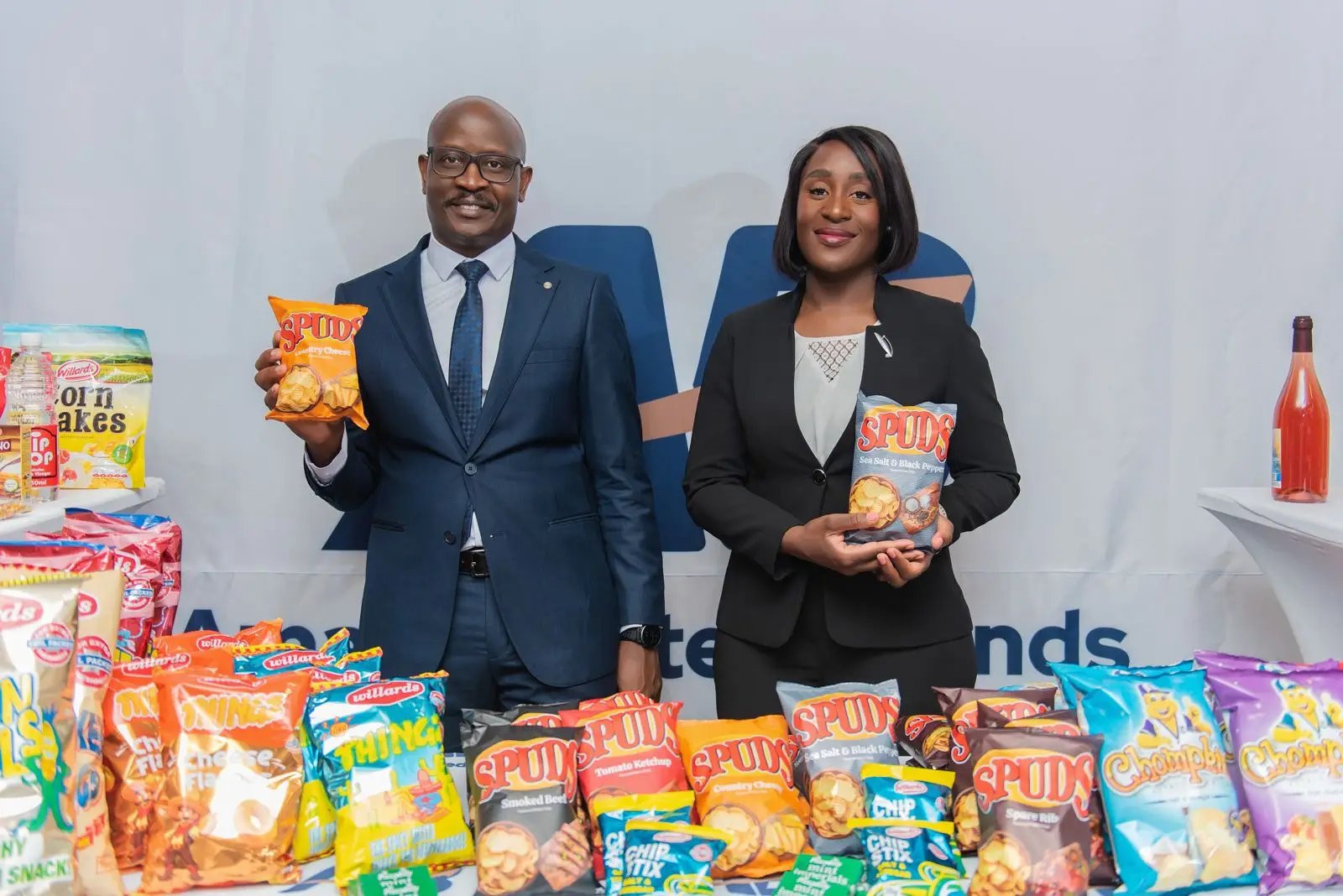
Zimbabwean manufacturing group Amalgamated Brands is seeking to grow annual revenue to US$120 million by 2030, as it turns to the Victoria Falls Stock Exchange (VFEX) to raise fresh capital for factory expansion and strengthen its position in the domestic and regional markets.
The group, whose portfolio includes some of Zimbabwe’s most recognisable food brands, has opened a US$20 million initial public offering (IPO), marking a significant step in its transition from the rehabilitation of distressed businesses towards a broader manufacturing and distribution growth strategy.
The proposed listing comes as the company seeks to capitalise on its established manufacturing operations, national distribution infrastructure and route-to-market capabilities to increase production capacity and capture opportunities in the consumer goods market.
Chief Executive Officer Anele Zunga said the group’s strategy was centred on building manufacturing capacity, improving distribution and developing a Zimbabwean business capable of competing beyond its domestic market.
“We are building on businesses and brands that have been part of Zimbabwean households for generations,” Zunga said.
“Our strategy is long term: invest in our manufacturing capability, strengthen the way we reach customers and consumers, and continue building a Zimbabwean company of scale that can compete and grow locally and in the region for many years to come.
“The listing represents a new chapter for a business whose origins lie in the turnaround of Cairns Holdings, a once-established food manufacturer that had fallen into financial distress.Takura Capital acquired Cairns in 2015 after the company entered final judicial management and was subsequently delisted from the Zimbabwe Stock Exchange.
At the time, most of its products had disappeared from retail shelves and the business carried debts exceeding US$25 million.
Through a court-approved scheme of arrangement, Takura assumed the company’s liabilities and funded settlements with workers, preference creditors and trade suppliers, while also paying existing shareholders for their shares.
The subsequent revival restored several household names to the market, including Spuds, Thingz, Charhons, Sun Jam, Cashel Valley and Willards Cornflakes.
The business has since expanded beyond manufacturing, building an integrated operating model that combines production, distribution and sales execution.In 2016, Takura established Cailogistics and Cailo Marketing Services (CMS) to support the distribution and marketing of Cairns products, as well as goods produced by third parties.
Cailogistics operates through a national fleet of more than 500 owned and hired vehicles, providing distribution services while also transporting products for external clients. CMS handles merchandising, sales support and promotions, extending the group’s reach into retail outlets and other consumer markets.
The structure gives the group control across three critical stages of the consumer goods value chain: manufacturing, logistics and route-to-market services.
That infrastructure is increasingly central to its growth ambitions, particularly as the company seeks to increase production volumes and improve the availability of its products across Zimbabwe and the region.
The group reported pro-forma revenue of US$78.7 million in 2025, representing growth of approximately 33% from the previous financial year, while earnings before interest, tax, depreciation and amortisation (EBITDA) stood at US$10.47 million.
More than 95% of its revenue is billed in United States dollars, while its operations support a workforce of more than 2,100 employees.IPO to finance manufacturing expansion
The US$20 million IPO comprises US$5 million in new shares issued by the company and US$15 million in existing shares being sold by Takura Capital.
The primary component is intended to finance manufacturing expansion at Cairns, while the secondary offer will broaden the shareholder base and provide Takura with a partial exit from its investment.
MMC Capital Advisory Head of Corporate Advisory Owen Namusi, who is acting as financial adviser and lead sponsor to the IPO, said the size of the new capital raise had been determined by the company’s immediate investment requirements rather than the amount of shares being sold by its existing shareholder.
After approximately US$520,000 in listing costs, US$4.48 million from the primary offer will be allocated towards a defined capital expenditure programme at Cairns.The projects include a new biscuit production line expected to more than double existing capacity and the installation of a soft-snacks production line.
The broader capital expenditure programme is estimated at US$46.6 million between financial year 2026 and 2030. The remaining US$42.1 million is expected to be financed through internally generated cash flows and additional borrowings.
Namusi said raising the entire five-year investment requirement upfront would have resulted in unnecessary shareholder dilution, particularly given that the projects would be implemented over an extended period.
The secondary offer, meanwhile, has been structured to satisfy VFEX requirements for a minimum public free float of 30%.
At the base offer level, the public float is expected to reach approximately 30.74%, with Takura retaining at least 55% of the enlarged share capital and remaining the controlling shareholder.
An additional US$9.8 million worth of existing shares may be made available in the event of an oversubscription.
Revenue projected to reach US$120 millionThe company’s growth ambitions are reflected in its financial projections, which envisage revenue increasing from US$94.4 million in financial year 2026 to US$120 million by 2030.
The projections, contained in the IPO prospectus, are dependent on the successful execution of the group’s expansion plans and should not be interpreted as guaranteed outcomes.
Beyond the biscuit and soft-snacks investments, the capital programme includes a Tetra Pak production line for baked beans, additional manufacturing capacity and energy-related projects.
The investments are intended to improve production efficiency, expand the product range and support higher sales volumes.Group Finance Director Rumbidzai Manjengwa said the business was also increasing investment in working capital to support anticipated growth and manage the seasonal nature of agricultural raw material procurement.
By June 30, 2026, borrowings had increased by US$4.3 million, of which US$2.2 million had been directed towards capital expenditure.
The balance, alongside first-half EBITDA of US$6.5 million, was used to strengthen raw material supplies, finance higher debtor balances arising from increased sales and build finished-product inventories.
Manjengwa said the company had increased raw material holdings by US$2 million to secure supplies ahead of production requirements.
The procurement strategy is particularly important for agricultural inputs such as peas, guavas, apples and peaches, which are purchased during harvest periods and processed throughout the year.
Buying produce when it is seasonally available allows the company to secure supplies at lower prices, potentially supporting margins while reducing exposure to fluctuations in raw material availability.
Dividend policy and shareholder returnsThe proposed listing also comes after the group distributed US$3.25 million in dividends during the first half of 2026.
According to Manjengwa, US$1.9 million represented an ordinary dividend from the 2025 financial year, equivalent to 40% of profit after tax attributable to the listed business perimeter.
The remaining US$1.35 million was a return of funds previously injected by the shareholder to finance the planned expansion of the Cailogistics fleet serving Lobel’s Holdings.
The proposed fleet expansion did not proceed following the decision to sell that business, prompting the return of the funds through a dividend.
Manjengwa said the entire US$3.25 million distribution was financed from the group’s US$4.5 million cash balance at December 31, 2025.
Going forward, the board intends to adopt a dividend policy targeting distributions of between 30% and 40% of profit after tax, with the intention of building towards that range over time.
For prospective investors, the balance between shareholder distributions and the funding of expansion will be an important consideration as the group moves into its next phase of development.
Listing marks a new phase for the groupThe Amalgamated Brands offer comprises 57,142,857 ordinary shares at US$0.35 each, with the base offer expected to raise US$20 million.
The IPO opened on October 14, 2026, and is scheduled to close at noon on November 30, with listing on the VFEX expected on December 7.
The minimum application is 100 shares, equivalent to US$35.The prospectus includes audited financial statements for 2024 and 2025, unaudited half-year results to June 30, 2026, and September 2026 management accounts, available for inspection at the company’s registered office and MMC Capital Advisory.
For Amalgamated Brands, the public listing is more than a change in ownership structure. It is an attempt to mobilise capital, strengthen corporate visibility and bring the discipline of public markets to a business built around established consumer brands and an expanding operating platform.The opportunity, however, will ultimately depend on execution.
Expanding production capacity, managing working capital, maintaining margins and converting distribution reach into sustained sales growth will determine whether the company can deliver on its five-year ambitions.