
By Tadiwa Jonhera
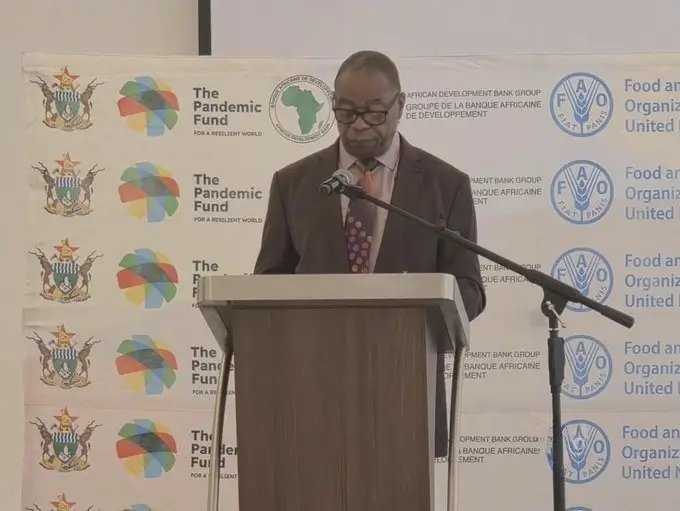
Zimbabwe has launched a US$14.33 million pandemic preparedness project aimed at improving early disease detection, laboratory capacity and emergency response as the country seeks to strengthen its defences against future health threats.
The three-year initiative, running from 2026 to 2028 is supported by the Pandemic Fund and will leverage US$49 million in partner co-financing and US$91.8 million in government co-investment.
The project will be led by the government with implementation support from the African Development Bank Group, the Food and Agriculture Organisation of the United Nations (FAO) and the United Nations Children’s Fund (UNICEF) alongside national and international partners.
Health and Child Care Minister Douglas Mombeshora said protecting public health was central to the country’s development ambitions under Vision 2030 and the National Development Strategy 2.
“Because health threats do not respect administrative or international boundaries, pandemic preparedness requires a whole-of-government and whole-of-society effort through the One Health approach,” he said.
The initiative will focus on five areas including disease surveillance, laboratory systems, workforce development, emergency preparedness and community engagement.
Authorities plan to upgrade 25 laboratories, comprising five national and 20 subnational facilities to improve rapid diagnostics, genomic sequencing, antimicrobial resistance testing and biosafety standards.
More than 10 000 professionals across relevant sectors are expected to receive training in disease surveillance, emergency response, risk communication and community engagement.
The project will also establish five public health emergency operations centres to improve coordination between institutions while expanding digital surveillance, cross-border monitoring and early warning systems.
Community engagement programmes including multilingual awareness campaigns and digital learning platforms, are expected to reach up to two million people.
UNICEF Zimbabwe Representative Etona Ekole said communities particularly children and vulnerable populations must remain central to pandemic preparedness.
“The first signs of an outbreak are often detected not in a laboratory but in a community,” she said highlighting the importance of trusted information and maintaining essential health services during emergencies.
FAO Subregional Coordinator for Southern Africa Patrice Talla said many pathogens with pandemic potential emerge where humans, animals and the environment interact.
He said stronger animal health systems and integrated surveillance would help Zimbabwe detect and prevent threats before they spread.
African Development Bank Country Manager for Zimbabwe Eyerusalem Fasika said the grant marked a shift from reactive containment towards preventing health threats from escalating.
Zimbabwe is also participating in a separate US$35.8 million regional Pandemic Fund initiative involving eight Southern African countries implemented by the World Health Organisation.
The regional programme is distinct from the country grant and focuses on climate-sensitive early warning, laboratory capacity, workforce development and cross-border coordination.