
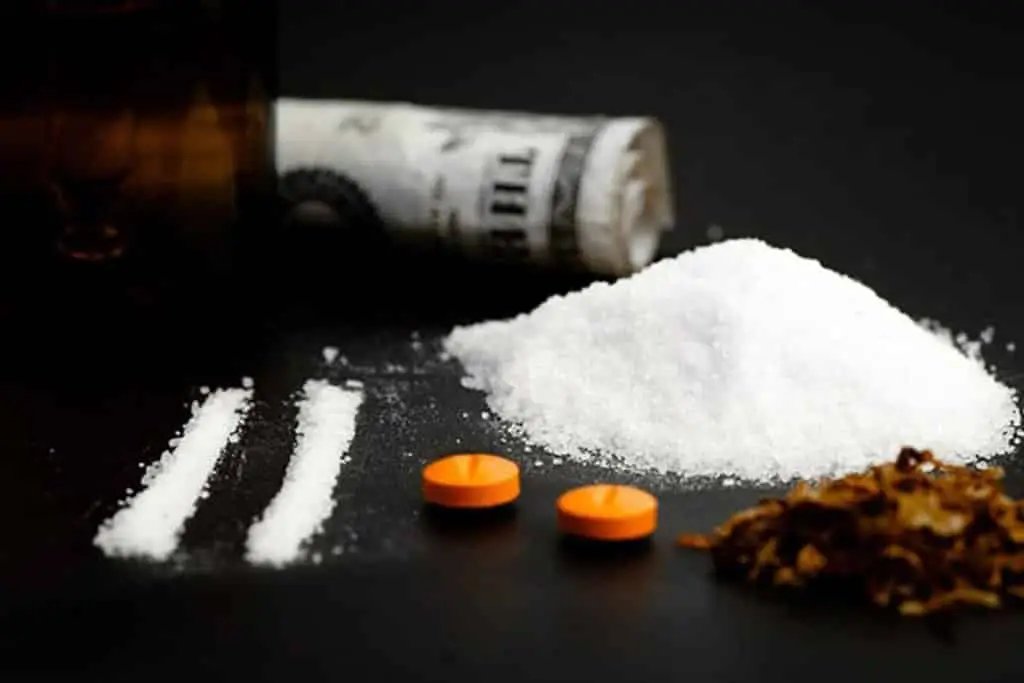
Government says 3 839 people have been arrested in nationwide crackdown on drug and substance abuse between June and September with authorities destroying 73 drug bases and recovering substances worth more than ZiG26.7 million.
Acting Information Minister Professor Paul Mavima announced the figures during a post-Cabinet press briefing, presenting a report covering the period from 1 June to 19 September 2026.
He said 2 706 of those arrested were under the age of 35 highlighting the continued involvement of young people in drug-related offences.
The authorities recovered various drugs including crystal methamphetamine, cocaine and cannabis as enforcement operations and public awareness campaigns were intensified across the country’s provinces.
“A total of 73 drug bases were destroyed while 171 awareness campaigns were conducted,” Mavima said.
The Medicines Control Authority of Zimbabwe also carried out 285 inspections nationwide resulting in 50 violations being referred to court.
According to the report, 1 032 accused persons were fined while 461 were sentenced to various prison terms with some receiving sentences of up to 15 years.
Under the government’s demand-reduction programme, awareness, prevention, youth empowerment, vocational training and livelihood initiatives reached 1 393 906 people. Of these, 814 906 were female and 579 000 male.
The government, Mavima said has also expanded efforts to provide treatment and rehabilitation for people affected by drug and substance abuse.
The Minister said 3 363 patients received treatment during the reporting period comprising 2 964 men and 399 women.
A further 73 patients were reported to have relapsed.
The government is continuing rehabilitation and refurbishment works at Gwanda and Sakubva rehabilitation centres while plans are underway to establish a 700-bed Presidential High-Capacity Drug Rehabilitation Centre.
The proposed facility, which is expected to serve as a model for similar centres in all 10 provinces will integrate clinical treatment, psychosocial rehabilitation, vocational training, agriculture, sport and recreation and community reintegration.
It will be developed on approximately 20 hectares, following a benchmarking exercise conducted at the Angel of Hope Foundation.
Under psychosocial support and community reintegration programmes 5 707 people received support services while 1 843 were reached through the toll-free helpline 406.
A further 594 people were successfully reintegrated into their families and communities after being discharged from the Angel of Hope Foundation and Wilkins Rehabilitation Centres.
The government is also pursuing legislative measures to strengthen its response to drug-related offences.
Mavima said the National Drug, Substance Abuse Control and Enforcement Agency Bill was under consideration by the Parliamentary Legal Committee.
During the reporting period, 4 934 drug-related cases were recorded of which 4 341 were completed.
The courts secured 4 243 convictions while 73 acquittals were recorded.
The government said demand for treatment, rehabilitation, psychosocial support and empowerment programmes continued to increase, requiring greater cooperation between state institutions and communities.
“The demand for treatment, rehabilitation, psycho-social support and empowerment initiatives continue to increase, demanding Whole-of-Government and Whole-of-Society collaboration to fight Drug and Substance Abuse in our communities,” Mavima said.
He added that measures to combat drug and substance abuse would be intensified warning businesses found violating the law that they would face legal consequences.