
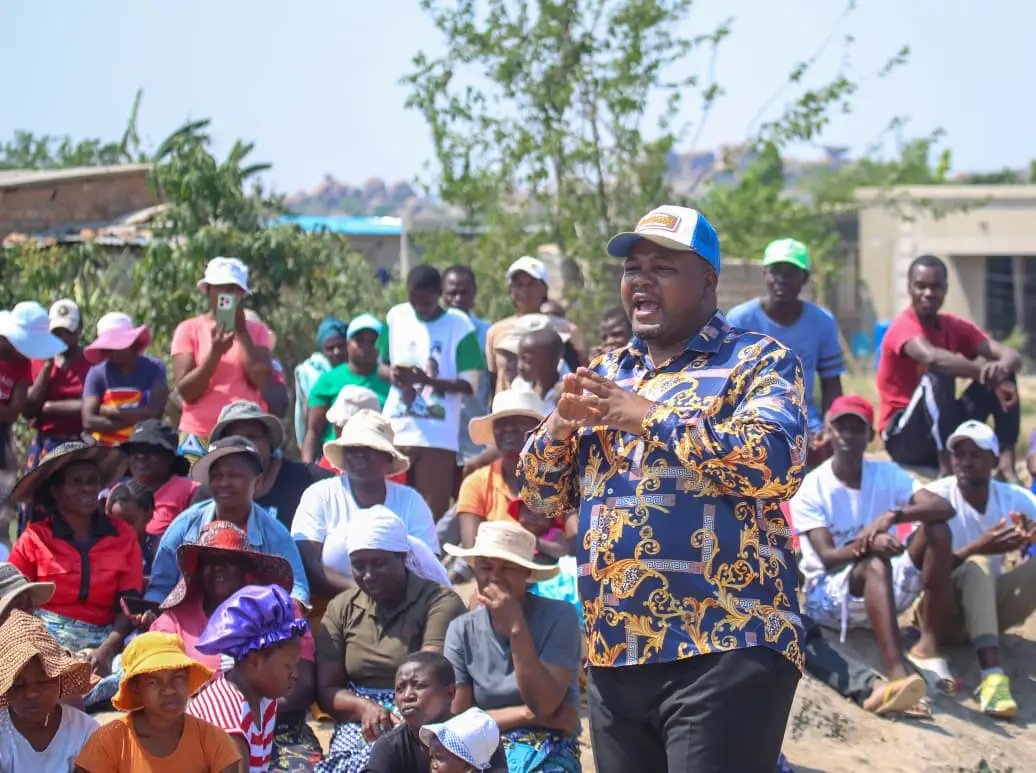
Residents of Harare’s Stoneridge suburb who have endured a decade of climate-related challenges are beginning to see improvements following an intervention by Dialogue on Shelter Trust (DoS) and Harare South MP Trymore Kanopula.
The initiative seeks to improve the community’s resilience to extreme weather through road rehabilitation and stormwater drainage works aimed at reducing flooding and protecting residential properties.
Kanopula has donated one tonne of cement and 20 cubic metres of concrete stones towards the construction of stormwater drains as efforts to address the settlement’s infrastructure challenges gather pace.
The MP made the commitment during a visit to the community where he commended DoS for its work in improving living conditions since the two began collaborating nearly a year ago.
“We thank the Dialogue on Shelter Trust for its contribution towards helping the people of Stoneridge, especially during these times of climate change, which brings disasters to communities,” said Kanopula.
He said DoS had cleared roads and constructed approximately two kilometres of stormwater drains to channel runoff away from residential properties.
The initiative is expected to reduce the risk of flooding and damage to homes during heavy rains, which have posed persistent challenges for residents.
Kanopula also said plans were underway to install borehole water systems to improve access to clean water.
Stoneridge residents were relocated by the government from Arlington and allocated 87 hectares of land which has yet to be formally regularised.
The lack of adequate infrastructure and formal regularisation has compounded the challenges faced by residents, particularly as changing weather patterns expose vulnerable communities to climate-related disasters.
DoS programmes coordinator Evans Banana said addressing such challenges required cooperation between residents, local authorities, government and other stakeholders.
“We want to identify the challenges faced by each settlement so that we can put our heads together to find solutions to those challenges,” said Banana.
He said the organisation uses a Climate Change Vulnerability Assessment Model to identify risks facing communities and develop interventions suited to their needs.
The approach has been implemented in Dzivarasekwa and is currently being used in Tafara where residents have gained access to electricity and sewer systems, according to Banana.
The model is intended to help communities identify their most pressing needs and prioritise practical interventions that improve living conditions and strengthen their ability to withstand climate-related shocks.
In Stoneridge, residents have welcomed the partnership with the district residents’ secretary applauding Kanopula and DoS for supporting the drainage project.
The residents’ representative said the community would continue digging the drains to build on the work already completed.